Certificate of Occupancy vs Governor's Consent: Which Do You Really Need?
Confused about C of O and Governor's Consent? Here's the definitive guide for diaspora investors on which documents actually protect your Nigerian property investment.
Your estate agent in Lagos just sent you a WhatsApp message: "The property has a Certificate of Occupancy, so you're good to buy!"
You're about to wire £30,000 from your UK bank account. But then your lawyer friend mentions: "Did you check if it has Governor's Consent?"
Governor's Consent? You thought the C of O was the golden ticket. Now there's another document you need?
And suddenly you're Googling at 1 AM in New York, Toronto, or Birmingham, trying to understand Nigerian land documentation before you lose your deposit.
Let me clear this up for you once and for all. Because the difference between C of O and Governor's Consent is the difference between owning land legally and owning an expensive piece of paper.
The Simple Answer (Before We Get Technical)
Here's what you need to know right now:
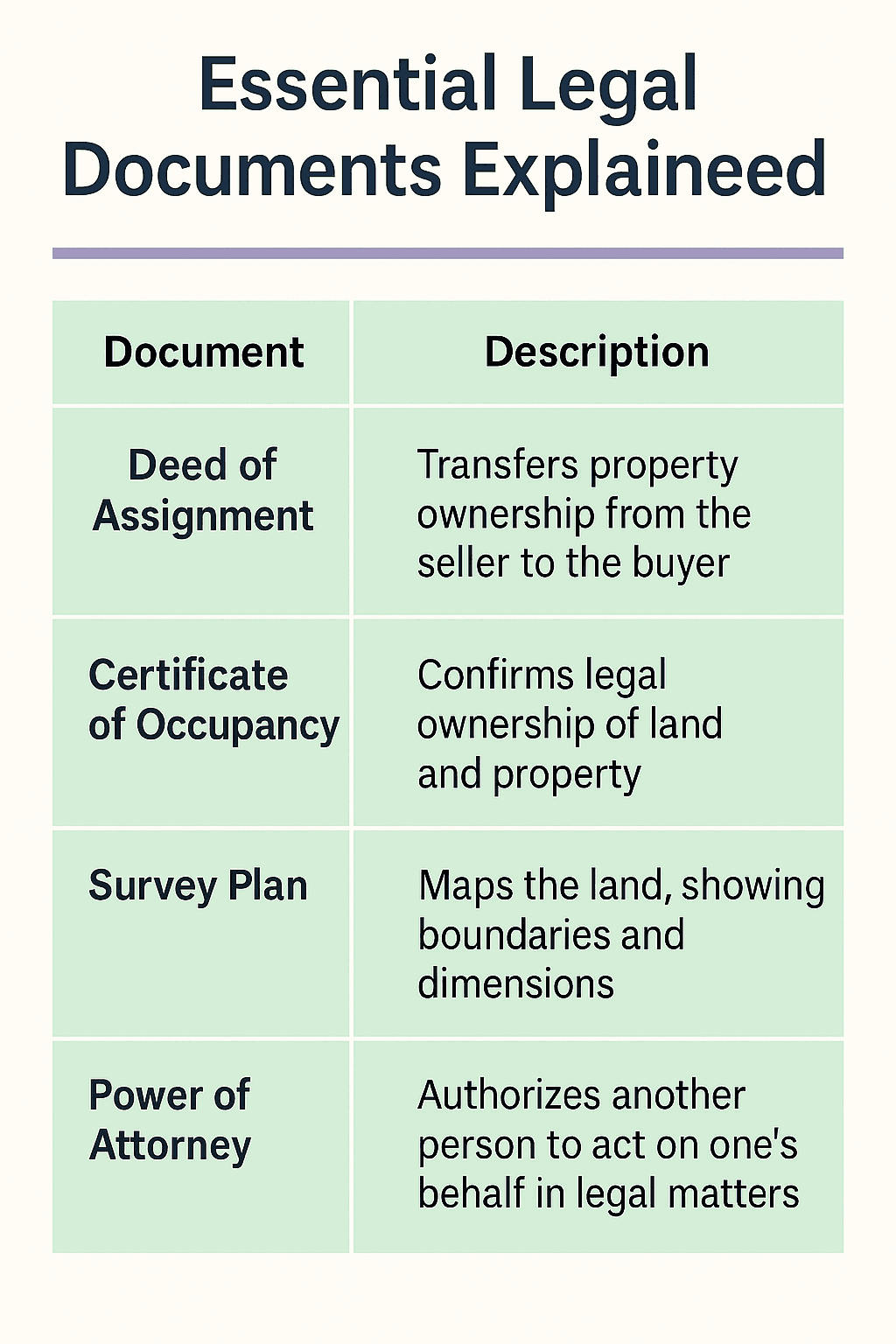
Certificate of Occupancy (C of O) = Proof that someone owns the land
Governor's Consent = Government approval that the land can legally be transferred to you
You need BOTH.
The C of O proves the seller owns it. The Governor's Consent proves you can legally own it after purchase.
One without the other is a problem. A big one.
Now let's dig into why.
What Is a Certificate of Occupancy?
The Certificate of Occupancy is the ultimate title document in Nigeria. It's issued by the state government (Lagos State, Ogun State, etc.) and proves that the holder has the legal right to occupy and use a specific piece of land.
Think of it as the land's birth certificate.
What the C of O Tells You:
- Who owns the land (the name on the certificate)
- The exact location (coordinates, district, local government area)
- The size of the land (in square meters)
- The type of ownership (statutory right of occupancy vs customary right of occupancy)
- Duration (usually 99 years from date of issue)
- Any restrictions on use (residential, commercial, agricultural, mixed-use)
Types of C of O:
1. Statutory Right of Occupancy Issued by the state governor for lands in urban areas. This is the strongest form of land ownership in Nigeria.
2. Customary Right of Occupancy Issued by local governments for lands in rural/customary areas. Slightly weaker but still legitimate.
Why the C of O Matters:
Without a C of O, you're buying land with questionable legal status. Maybe it's family land. Maybe it's community land. Maybe it's government land being sold illegally.
The C of O is the government officially saying: "Yes, this person has the right to this land."
If you're spending £20,000+, you want that government stamp.
What Is Governor's Consent?
Here's where it gets interesting.
The Nigerian Land Use Act of 1978 says that ALL land belongs to the state government. Yes, even if you have a C of O.
You don't "own" land in Nigeria the way you own land in the UK or US. What you have is a "right to occupy" granted by the government.
And because the government technically owns all land, they require approval whenever land changes hands.
That approval is called Governor's Consent.
What Governor's Consent Does:
When you buy land from Mr. Adekunle who has a C of O, the transaction must be approved by the state governor (or the designated authority).
Governor's Consent is the government saying: "We acknowledge and approve this transfer of land from Mr. Adekunle to you."
Without it, your purchase isn't legally recognized—even if you paid full price, even if you have the deed of assignment, even if the seller had a valid C of O.
The law is clear: Any land transaction without Governor's Consent is illegal and void.
What This Means Practically:
Imagine you bought land in 2020 without getting Governor's Consent. In 2025, you want to sell it to someone else.
Problem: You can't get Governor's Consent to sell land if you never got Governor's Consent when you bought it.
You're stuck. You can't sell legally. And if the buyer is smart, they won't buy from you because they'll face the same problem.
You've essentially bought land you can't legally transfer. It's trapped.
Why Both Documents Are Non-Negotiable
Let me show you what happens in different scenarios:
Scenario 1: C of O | Governor's Consent
This is what you want. The seller has a C of O proving they own the land. After you buy, you apply for Governor's Consent, and the government officially transfers the C of O to your name.
You now legally own the land. You can build, sell, lease, or mortgage it. Full property rights.
Verdict: Safe to buy.
Scenario 2: C of O | Governor's Consent
The seller has a C of O, which is good. But when you ask about Governor's Consent, they say:
"Oh, we'll apply for it after you buy."
Or: "It's expensive, let's skip it for now."
Or: "I know someone who can get it 'processed' for cheaper."
Danger zone.
If you buy without securing Governor's Consent:
- Your ownership isn't legally recognized
- You can't sell the property legally later
- You can't use it as collateral for a loan
- If there's a dispute, courts may rule against you because the transfer wasn't legal
- The seller could theoretically sell to someone else and that sale could be upheld if they get consent first
Verdict: Don't buy until you confirm Governor's Consent process is initiated and will be completed.
Scenario 3: C of O | Governor's Consent
The seller doesn't have a C of O. They have receipts, survey plans, maybe a deed of assignment from 30 years ago, and a lot of promises.
This is buying trouble. Without a C of O, you have no proof the seller actually owns the land. They might be selling you family land that's disputed. Or community land. Or land that doesn't exist.
And without a C of O, you can't even apply for Governor's Consent because there's nothing to transfer.
Verdict: Walk away. Immediately.
Scenario 4: C of O | Governor's Consent
This scenario doesn't exist because you can't get Governor's Consent without an underlying C of O. If someone claims to have consent without a C of O, they're lying.
How to Verify the C of O Is Real
Fake C of Os are rampant in Nigeria. Scammers use high-quality printers and fake government stamps. From London or New York, how do you know if the document is real?
Verification Steps:
Step 1: Check the Land Registry Website
Lagos State (and increasingly other states) have online databases where you can verify C of O numbers.
- Go to the official state land registry website
- Enter the C of O number
- Cross-check the details: owner's name, plot size, location
If the details don't match what you're being told, the C of O is fake or altered.
Step 2: Hire a Property Lawyer to Conduct a Land Search
Your lawyer can physically go to the Land Registry and search the records for the C of O.
They'll check:
- Is the C of O registered?
- Does the seller's name match the registered owner?
- Are there any liens, caveats, or encumbrances on the property?
- Is the land under government acquisition?
This costs £300-£700 but is non-negotiable.
Step 3: Verify the Physical Document
A lawyer or land professional can spot fake C of Os by checking:
- The paper quality (government documents have specific paper stock)
- The seal and signatures (they should match known official formats)
- The C of O number format (each state has specific numbering systems)
- Date stamps and registry marks
If something looks off, it probably is.
Read our full guide on document verification.
How to Verify Governor's Consent
If the seller says "Yes, I have Governor's Consent," you need proof.
What to Check:
1. The Consent Document Itself
Governor's Consent is a formal document issued by the state government. It should have:
- Official letterhead from the state governor's office or Lands Bureau
- Consent number (for tracking)
- Details of the transaction (seller, buyer, property description, price)
- Government seal and signatures from authorized officials
- Date of issuance
2. Verify the Consent Number Online or at the Lands Bureau
Just like C of Os, consent numbers can be verified. Your lawyer should confirm the consent is:
- Registered in government records
- Matches the transaction details
- Hasn't been revoked
3. Check That the Seller Actually Got Consent When They Bought
Ask the seller: "When did you buy this land, and can I see the Governor's Consent for that transaction?"
If they bought in 2015 but never got consent, they can't legally sell to you. The chain is broken.
How to Get Governor's Consent (The Process)
Let's say you're buying land with a valid C of O. How do you get Governor's Consent?
The Application Process:
Step 1: Complete the Sale Agreement
You and the seller sign a Deed of Assignment (the document transferring ownership).
Step 2: Gather Required Documents
Typically includes:
- Original C of O (or certified true copy)
- Survey Plan
- Deed of Assignment
- Tax clearance certificates (for both buyer and seller)
- Proof of payment (evidence of the purchase price)
- Application letter to the governor
- Application forms (varies by state)
Step 3: Submit Application to the Lands Bureau
Your lawyer submits the application package to the state Ministry of Lands or Lands Bureau.
Step 4: Pay the Consent Fee
This is the expensive part. Governor's Consent fees vary by state and property value, but typically:
Lagos State: 15% of the property value or market value (whichever is higher)
So if you buy land for ₦20 million, the consent fee is ₦3 million (about £2,500).
Yes. That's on top of the purchase price.
Other states may charge 5-15% depending on local regulations.
Step 5: Processing and Issuance
After payment, the government processes the application. This can take:
- Officially: 30-90 days
- Realistically: 6-12 months (sometimes longer due to bureaucracy)
Once approved, the Governor's Consent is issued, and the C of O is officially transferred to your name.
Who Pays for Governor's Consent?
This is often a point of negotiation between buyer and seller.
By Law: The buyer is responsible for paying the consent fee because it's the buyer seeking to register ownership in their name.
In Practice: It's negotiable.
- Some sellers include it in the purchase price: "I'm selling for ₦25 million, which includes Governor's Consent fees."
- Some buyers pay it separately: "I'll pay ₦20 million for the land, and I'll handle consent fees myself."
- Sometimes it's split 50/50
As a diaspora investor, I recommend:
Agree upfront who pays. Get it in writing. Budget for it even if the seller promises to handle it, because many sellers will "forget" or claim they don't have the money once you've paid.
What Happens If You Buy Without Governor's Consent?
Let's be real. Many Nigerian property transactions happen without Governor's Consent—especially in the past before enforcement tightened.
So what happens?
Short Term:
Nothing. You move in, you build, you use the land. The government isn't actively checking individual properties.
Long Term (The Problems):
1. You Can't Sell Legally
When you try to sell years later, serious buyers (or their lawyers) will ask: "Where's the Governor's Consent for when you bought?"
If you don't have it, they'll walk away or demand a huge discount.
2. You Can't Get a Mortgage or Loan Against It
Nigerian banks require Governor's Consent before accepting property as collateral. Without it, you can't leverage the property financially.
3. You're Vulnerable in Legal Disputes
If someone challenges your ownership (rival claimant, family member, omonile), your lack of consent weakens your legal standing.
Courts can rule that since you didn't follow the legal process, your claim isn't valid.
4. Penalties and Fines
If the government discovers you've transacted without consent, they can impose penalties, fines, or even revoke your claim to the land.
5. You Can't Apply for Planning Permits
To get building approval, many states now require proof of Governor's Consent. Without it, you can't legally build.
Can You Get Governor's Consent Retroactively?
Yes. If you bought land years ago without consent, you can apply for it now.
The process is called Regularization or Perfection of Title.
You'll need to:
- Provide proof of the original transaction (deed of assignment, receipts)
- Pay the consent fee based on the current market value (not what you paid years ago)
- Pay any applicable penalties for late application
- Submit all required documents
It's more expensive and bureaucratic than doing it right the first time, but it's possible.
If you're sitting on property you bought without consent, start the regularization process NOW. The longer you wait, the more expensive and complicated it gets.
State-by-State Differences
Each Nigerian state has slightly different rules. Here's what you need to know:
Lagos State
- Consent fee: 15% of property value
- Processing time: 6-12 months (officially 90 days)
- Online application available: Yes (through the Lagos State Land Information System)
- Strictest enforcement in Nigeria
Abuja (FCT)
- Consent fee: 15% of property value
- Processing time: 3-6 months
- Well-organized system compared to many states
Ogun State
- Consent fee: 5-10% (varies by area)
- Processing time: 6-9 months
- Growing development due to Lagos overflow
Rivers State (Port Harcourt)
- Consent fee: 10-15%
- Processing time: Variable (can be lengthy)
Check with a local property lawyer for the most current fees and processes in your specific state.
Red Flags That Should Make You Walk Away
When reviewing documents, watch for:
Red Flag 1: Seller Refuses to Provide Original C of O
"I'll show you a copy, but I can't give you the original until after you pay."
No. You need to see and verify the original C of O before any money changes hands.
Red Flag 2: C of O Is in Someone Else's Name
The seller is Mr. Adebayo, but the C of O is in Mrs. Olawale's name.
Unless there's a clear, documented chain of title (deed of assignment + Governor's Consent for the transfer from Olawale to Adebayo), this is suspicious.
Red Flag 3: Seller Says "Governor's Consent Isn't Necessary"
It absolutely is. Anyone telling you otherwise is either ignorant or scamming you.
Red Flag 4: Seller Offers to "Arrange" Consent Through Shortcuts
"I know someone in government who can get it done faster and cheaper."
This usually means forged documents or bribes that will come back to bite you.
Do it the legal way. Pay the official fees. Use official channels.
Red Flag 5: The C of O Looks Too New
If the C of O was supposedly issued in 1995 but the paper looks brand new with no aging, wear, or fading, it's likely a forgery.
Old documents should look old.
Your Action Checklist Before Buying
Don't pay a single pound until you've checked:
- Seller has original Certificate of Occupancy (not just a copy)
- C of O verified through state land registry (online or in-person search)
- Property lawyer conducted independent title search
- C of O is in the seller's name OR there's a clear chain of title to the seller
- No liens, caveats, or encumbrances on the C of O
- Land is not under government acquisition
- Seller obtained Governor's Consent when they bought (if applicable)
- Agreement on who pays Governor's Consent fee for your purchase
- Budget allocated for consent fee (15% of property value in Lagos)
- Lawyer drafted Deed of Assignment to be executed after payment
- Plan in place for submitting consent application immediately after sale
If anything on this list is incomplete or unclear, pause. Investigate. Don't rush.
Working with Holford Homes: Pre-Verified Properties
Look, I'm clearly biased, but this is why working with established companies matters.
When you buy through Holford Homes:
- Every property has verified C of O documentation before listing
- We provide clear chain of title documentation
- We facilitate the Governor's Consent application process
- We connect you with vetted property lawyers
- We handle the bureaucracy while you stay in Toronto, London, or New York
You still do your own due diligence (you should), but the heavy lifting is already done.
Explore our pre-verified listings or book a free consultation.
Summary: The Simple Rules
Let me bring this back to basics:
Rule 1: Only buy land with a valid, verified Certificate of Occupancy.
Rule 2: Always budget for and obtain Governor's Consent after purchase.
Rule 3: Verify, verify, verify. Use lawyers. Use online databases. Use physical registry searches.
Rule 4: Never skip steps to save money. The "savings" will cost you 10× later.
Rule 5: If something feels off, walk away. There will always be another property.
The C of O proves ownership. The Governor's Consent legitimizes transfer.
You need both. No exceptions.
Your £30,000 is hard-earned money from years of work abroad. Don't lose it to paperwork mistakes or document fraud.
Protect yourself. Buy smart.
Have questions about C of O or Governor's Consent for a specific property? Book a consultation and let's review your documents together.
Found this helpful? Share it with other diaspora investors who need to understand Nigerian land documentation.